



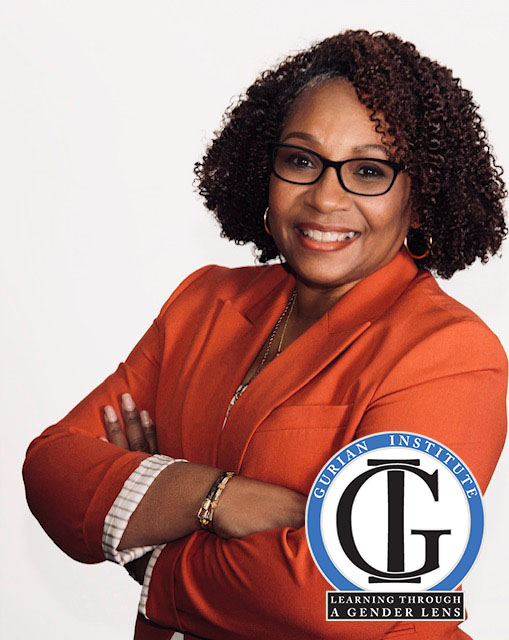
Journalist Lisa Britton is a friend and colleague of Michael Gurian and the Gurian Institute. She is a woman advocating for girls and women and boys and men. Working in the middle ground where polls show most Americans to be on these issues, she calls attention to the needs of both sexes.
In this piece, Lisa explores how it is that a leading advocate for women’s health could argue that men’s health is not important or, worse, laughable. Check out Lisa’s piece in our newsletter today and subscribe to Lisa’s substack at lisabritton.substack.com. Thank you, Lisa, for your continued advocacy for both sexes.
I woke up, looked at my phone, and saw a message from my friend and fellow advocate for the well-being of boys and men, George (he goes by TheTinMen on social media) that said, “FFS… blowing up on Instagram.” It was a viral video from journalist Katie Couric that had already drawn thousands of views and comments. She was taking aim at the State of Men’s Health Act.
At first I thought it had to be a joke. I couldn’t believe someone would treat as a punch line legislation that would, for the first time, create a federal Office of Men’s Health. Couric singled out Sen. Ruben Gallego of Arizona, who introduced the Senate companion bill with Sen. Roger Marshall of Kansas. She laughed and insisted this was not satire—as if an office dedicated to men’s health were some kind of joke.
I have advocated for the well-being of boys and men for nearly a decade. Many of us have fought to get an Office of Men’s Health established. We currently have eight federal offices devoted to women’s health across HHS and its agencies and zero for men. Zero. That doesn’t look like equality to me.
In the video, Couric laid out the familiar arguments that treat an office for men as an insult to women. It’s astonishing how often this subject is framed as a zero-sum game by women like her. People in my space constantly say it isn’t, but I find that harder to believe when the other side keeps acting as if it is.
Investing in men’s health doesn’t take anything away from women. The bill text literally says so in plain language. Funds for the proposed office “shall be derived from amounts authorized to be appropriated by other provisions of law, excluding any amounts authorized to be appropriated to the Office on Women’s Health… or any other office of women’s health.” Why keep telling the public otherwise?
For background: the State of Men’s Health Act was introduced in the House on February 20, 2026, as H.R. 7602 by Democratic Rep. Troy Carter of Louisiana and Republican Rep. Greg Murphy of North Carolina. It would require the Government Accountability Office to study men’s health in the United States and direct HHS to establish an Office of Men’s Health. The reception was respectful, but the bill needed more momentum. On July 23, Senators Gallego and Marshall introduced the Senate companion, S. 5113. Democrats are leading these bills, with Republican co-leads. That’s remarkable, commendable, and politically brave of them.
Women’s organizations have long framed help for boys and men as a threat to girls and women. When you realize this is also a well-funded advocacy industry, the pattern starts to make sense. Just weeks ago, women’s organizations including the American College of Obstetricians and Gynecologists, the Society for Women’s Health Research, and the Women First Research Coalition asked Congress for $20 billion over ten years to “close the women’s health gap.” We are asking for the first Office of Men’s Health in American history. They are asking for $20 billion. This should not be a competition.
Men and women are on the same team. If men’s health is failing and ignored, that harms wives, mothers, daughters, and whole communities as well as boys and men. The bill is aimed at the crises we already know: shorter male life expectancy, preventable disease, overdoses, and suicide. Men die by suicide at four times the rate of women. Who on earth would be against coordinating a federal response to that?
Ladies reading this: think about your sons, partners, fathers, nephews, and friends. Don’t they deserve attention, research, and resources so they live longer and healthier lives?
Couric cited decades-old exclusion of women from clinical trials as a reason not to take men’s health seriously now. As my friend and researcher James L. Nuzzo and others have documented, the historical picture is more complicated than how they frame it. When women of childbearing age were kept out of certain early-phase drug trials, it was to protect them, not a conspiracy to study only men forever. If those women had been enrolled in untested drug trials, many of the same voices complaining about women’s exclusion would now be accusing researchers of historically using women as guinea pigs. For decades now, NIH-funded research has enrolled more women than men in most years.
None of that erases the fact that some conditions unique to women remain understudied, but the public is being gaslit when every discussion of men’s health is treated as theft from women.
I’m not against investing in women’s health. I’m a woman. Of course I want attention for women’s health. I have lived some of the difficulties people describe. A few years ago I was sick and no one could tell me why. I was dismissed, told it was in my head. The story women know too well. It turned out I had been given the wrong tests. There was something wrong. I was rushed into emergency surgery. So yes, I understand why women fear being ignored. I understand the need for research on endometriosis, fertility, and other conditions that fall hardest on us. That doesn’t mean we finance only women’s health. It doesn’t mean we put boys and men on the back burner. It doesn’t mean we sneer at an Office of Men’s Health. This is not a zero-sum game. We can address both at the same time.
In early June, during the first week of Men’s Health Month, the Congressional Men’s Health Caucus held a Conference on Capitol Hill to highlight the House bill and the case for prevention. The same day, Melinda French Gates announced $215 million more for women’s health worldwide, bringing her recent giving in that area to more than $600 million over two years, and it stole the headlines. I called out the timing then. I am grateful for Gates’ financial contributions to boys and men’s issues over recent years, but it was a reminder that men’s health still can’t hold the spotlight even in the month named for it. Philanthropy for women isn’t the problem but treating Men’s Health Month as an inconvenient backdrop is!
I’m tired of watching women’s organizations and a media narrative talk over men’s health. It helps no one. It doesn’t help boys and men who need compassion and support. It doesn’t help girls and women who live with the consequences when the men around them die younger, go untreated, or disappear into suicide and addiction.
A federal office of men’s health is not a luxury; it’s a necessity. The data, the lived experience of millions of men, and the empty chairs at too many family tables all point to the same conclusion. It’s time, long past time, to stop silencing men’s health.
Related News
On September 18, I attended the Virginia Blueprint: Strategies for Boys and Men Conference at the Virginia General …

Have you listened to The Wonder of Parenting podcast? We are proud to have been doing this podcast …

From Michael Gurian: I spent last weekend at Army and Navy Academy, a boys boarding school in Carlsbad, …