


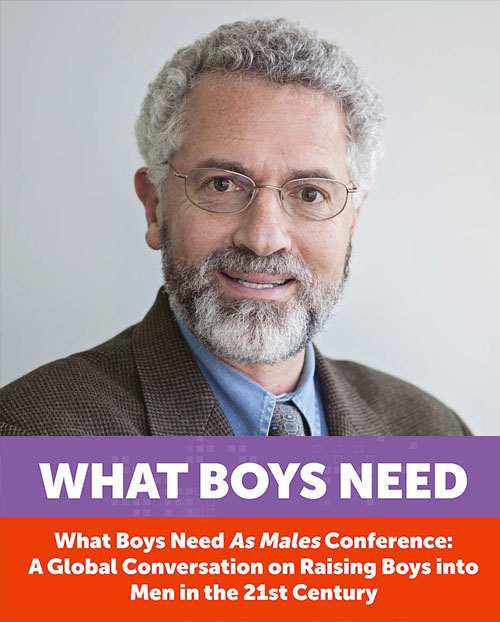
In two recent conferences on boys’ mental health, political confusion around “gender,” “masculinity,” and “social construction” took up a lot of time. At one conference, talking about the male brain was considered “boring” despite that the male brain is where male mental health resides.
At another conference a speaker told the group that using the word “male” was ineffective in politics and media because advocates for women and trans don’t like brain-based research. Better, this researcher said: Stick with talking about “social constructs of masculinity.”
Today’s Blog Post Is Written By Michael Gurian
Male Mental Health Is A Brain Issue, Not a Social Construct
As an expert in this field, I have a different vision. It is the subject of this essay, with references that track back decades. I write this in anticipation of the What Boys Need As Males Virtual Conference in two weeks (www.helpingboysthrive.org). We’ve had fifty years of social-construction arguments regarding our boys and men, but our society just deepens its male mental health crisis.
Here is my beginning place for conversation, a set of truths I hope we can admit over the next couple years. If we do, we will create lasting social change for the millions of males in crisis. If we don’t, things will get worse not just for our boys and men but for everyone else.
- A civilization rises and falls based on male mental health; if our boys and men are not mentally healthy, our society will fail to progress naturally and successfully.
- Male mental health is a brain issue: The male brain is in trouble today, no matter, despite, or beyond our debates on the “social constructs” and “masculinity” or “masculinities.”
- Environmental neurotoxins, institutional failures, digital trauma, and generalized developmental neglect impede male mental health by downward affects on male neuro-psychological growth.
- While for some people it may feel “safer” to avoid “male,” solutions that have already proven to work understand the male brain—to talk about social constructs and “masculinity” without understanding the male brain is not a lasting solution.
The speakers at our What Boys Need As Males Conference (on Zoom, January 23 – 26, 2026) will bring to bear decades of research in which masculinity and social constructs will get discussed, but there will generally be more emphasis on “male.” (Please see www.helpingboysthrive.org to learn more and to register for this free virtual conference). Our Gurian Institute team has organized this conference to help you study and assist male development. Joined by our colleagues, we have argued for more than three decades that:
- When a society focuses on “masculinity” primarily, the social construction viewpoint ends up stereotyping then shaming males as inherently defective, because masculinity gets defined as toxic, and the ways that males naturally behave and process feelings are seen as inferior to female.
- Masculinity conversations that shame males also, often, increase misandry (dislike/hatred of males), which leads to a dangerous indifference toward male mental health. We end up neglecting our real males who do not need hating; they, in turn, isolate and withdraw from healthy society.
- Androphobia” (fear of males) often becomes concomitant with misandry–not just social dislike of males, but fear of males. You have likely seen androphobia in academic accusations that stoicism and aggression (which are, in fact, healthy) are toxic and destructive when they are masculine.
- Especially in the technologically developed world, a focus on social constructs impedes progress because it does not reflect actual causation. Instead, by misreading males, that focus creates asymmetry between systems and male developmental needs, e.g., in school, family, and mental health systems.
- Hostility and indifference toward natural male development decreases male mental health (and, in many cases, female) while increasing male distress to levels that put our society at risk—millions of males fail or “check out” and some, quite simply, take revenge on us.
- Inquiry, awareness and training in who boys and men are as males must become essential human practice (it works, as I’ll show below); it must become our society’s permanent training just as social awareness and training on female needs is now permanent in society.
- To extend that point: When we focus on what our males need as males we help everyone else thrive, too, by maturing our males to develop a strong identity then give that strength to others. Maturing a male into healthy manhood leads to males who are of service and leads, from there, to a healthier society.
- Happily, if we all become trained in healthy male development, we will be learning something that already, unconsciously, matches our instincts. We can all recognize that the male and female brains are different because we live it. We know that males and females have some different methods of interaction.
The What Boys Need As Males Conference looks at male development and male needs in depth. Various speakers will talk about masculinity and social construction, but mainly we want to focus on who males are and what males need so that our society can align politically, practically, and in social policy to help our boys and men flourish in relationships with girls, women, others, and society as a whole.
The Science Is Exciting, Rich, and Deep
In this vein, I counter-argued at the two conferences (mentioned at the outset) that we should consider it unsafe NOT to talk about the male brain because, after all, the male brain preexists social constructs in the same way that natural laws and mathematical logic predate our human discovery of them; in the same way chemicals mix together at an atomic level even though we have only recently learned how they work.
Use of brain scans over the last forty years helps us to see what is original, “mathematical,” natural, and valuable in our males—similarly, we can see, from scans of female brains, the wonderful internal world of women and girls. Educators, parents, counselors, professionals, politicians, business leaders, and citizens who look at male/female brain scans do not find the science boring; they find it exciting because it is so primal (see some male/female brain scan results at https://www.pnas.org/doi/10.1073/pnas.2310012121 and I will show brain scans in my keynote at the conference). Ultimately, human males and females develop on parallel, equal, but somewhat different neural paths.
Abandonment of Healthy Male Development Is Our Achilles Heel
I hope now is the moment to pull off our veils and blinders to see our males for who they are. The recent political interest (2024 – 2026) in “getting the male vote” is fresh air breathed into the topic, I feel. Let’s let this fresh air help us work with, not against, males. Various books published in the last year show this interest, including Boys, A Rescue Plan (2025), which I wrote with Sean Kullman, Director of the Global Initiative for Boys and Men, and Scott Galloway’s memoir and primer Notes on Being A Man (2025), and others.
Males vote viscerally (as do females) based on who seems to understand them better–not as “social constructions,” but as bodies, brains, and souls that need leadership and empathy. Previous recent books in the psychology field show a social movement building, e.g., my Saving Our Sons (2017), The Boy Crisis, Warren Farrell and John Gray, 2019, On Boys and Men, Richard Reeves, 2022, Boy Mom, Ruth Whippman, 2024, Adolescence on Netflix, 2025, and others. Meanwhile, many media stories and social media posts still connect the boy crisis, male loneliness, the male mental health crisis, and male academic failure to “the manosphere,” “masculinity,” “masculinities,” “toxic masculinity,” and “social construction.”
Sean Kullman and I call this the masculinity trap. Yes, talking about masculinity can have value, but this social construction trap relies on soft science that does not help us to get at real causes of male distress, including the root social cause: Our social abandonment of healthy male development. Deciding academically and via social media that “male” is bad or unnecessary, we abandon male development and hope that arguments around social construction will heal us.
The following are some areas of abandonment. As I note them, I will attach natural male need and various references.
- Males need schooling that teaches the male brain as effectively as it does the female. Our educational system favors the female, as most teachers freely admit (Boys and Girls Learn Differently 2001, 2011). Educators do not receive academic training in the male/female brain and default toward standards that often do not include male development systemically.
- Male brains need active fathering, but we have robbed millions of males of the father-contact their male neuro-biology needs to mature well (The Wonder of Boys, 2006). Disconnection from father harms girls biologically and emotionally (The Minds of Girls, 2018), but research consistently shows the male brain to be especially vulnerable to lack of father/male role models (A Fine Young Man, 1998).
- Males need protection from technologies and digital assets that impede the male brain’s development of male default mode network connectivity to the frontal lobe. Very few people, however, including parents and educators, are trained in this science. The result: We do not protect the developing brains of young males from mental health issues caused by neuro-digital stressors (Saving Our Sons, 2017).
- Males need to develop intrinsically rewarding yet externally-focused purpose and missions that females, without social force, often develop internally during childhood and adolescence. Previous societies have insisted on rites of passage and male social-emotional mentoring to mature a boy’s character into loving, wise, and successful manhood (The Purpose of Boys, 2006, The Good Son, 1999). In social fear of “masculinity,” our society has removed most of these health-creating processes from male lives
- Males need male-only spaces in which to develop friendships and social-emotional skills. In our fifty-year focus on masculinity (including androphobia and misandry), we condemn male-only spaces/groups as dangerous when most are healthy and essential. Male emotional development in male spaces teaches boys nurture, empathy, and feeling-processing (The Wonder of Boys, 1996, How Do I Help Him? 2011).
- Males need parents and others to protect their physio-chemical development via developmentally supportive nutrition (decrease in junk food, plastics, neurological toxins, endocrine disruptors) and multiple hours of exercise and physical movement per day, whether in sports, athletics or family exercise plans (Saving Our Sons, 2017). The damaging effects of environmental neurotoxins inside food, fertilizer, pesticides, lotions, sunscreen and other pollutants cannot be overestimated.
- Males need mental and physiologic health systems to understand the male brain. Like educators, our doctors, psychiatrists, therapists, counselors, and others don’t receive training in male/female brain difference, yet male brains are the contact point for care of boys and men (How Do I Help Him? 2011). When a boy has been traumatized, it is a male brain that has been traumatized; to heal trauma in therapy and life, boys often need different strategies than the female brain needs (Boys, A Rescue Plan 2025), but these tactics are rarely taught to our professionals for fear that they would veer into “the masculine.”
- Males need parenting systems to mature and develop boys as males. While there is great variety in what it means to be male and female, including gender experimentation, there are two chromosome-23 spectra for brain wiring: male and female (Nurture the Nature, 2006). We are raising “children,” yes, and a few of these children will experiment with gender, but at the baseline we are raising girls and boys. When we focus on “male” and “female,” our parenting systems align with deep human development; when we don’t, they are much more hit and miss.
- Helping males to get out of (or avoid) the “man box” is useful for some boys, but if the social system as a whole does not respect males as people with natural needs, little lasting worth can come from debates, policies, and tools about masculinity/the man box (Boys, A Rescue Plan, 2025). We have to keep reminding ourselves: Male comes before masculinity or non-masculinity. Male is the starting point. Programs that including male brain knowledge with man-box knowledge are the most successful, e.g., the MANCAVE program in Phoenix, Arizona.
- Male violence rates should be a post-modern clue to all of us that the male brain is struggling. Academic opinions such as “boys kill people because they don’t cry,” or “boys don’t tell us what they feel in words, so they hurt people and themselves” are popular but not factual. In reality, boys harm others and themselves because of neural conditions, including trauma-response and male-type depression. Social blaming of boys for our own abandonment of males is a vicious cycle we adults perpetrate (Boys, A Rescue Plan, 2025).
If we do not give our boys what they need—not just as social constructs but as males–we abandon them to depression, radicalization, loneliness, isolation, and failure. Abandoned males are the millions unemployed (around 9 million have stopped looking for work), the males experiencing mental health issues without targeted assistance, millions of addicted males; males who kill themselves; males who fail in school, males who commit crime, are sex trafficked, hyper-game and gamble, use porn excessively; homeless males, males unable to love and be loved, males lacking purpose and mission, males drifting into digital/artificial life without meaning.
In the thirty-six years during which I have been studying human depression, I have never seen male depression rates like we have now.
Training Ourselves On “Male” and Utilizing Male-Specific Practical Strategies
If we take our social blinders off to see our boys and men, we can lean into male much more than we do now, committing ourselves to understanding the male brain, male-type depression, male-specific needs, and what actually constitutes loving, wise, and successful manhood. A healthy backdrop for this leaning-in is, for me, the insight that, culture-wide, we stopped using “femininity” decades ago. We prefer to focus on female development as respectable, needed, and sacred. Let’s now do the same thing with “masculinity”—decrease its use so that “male” and “male development” get more constant use in the social good. Where our language goes, so goes our culture. “Masculinity” does not need to disappear just as “femininity” is not gone, but male and female can evolve with more emphasis now than the two old words.
Ultimately, too, we need to commit to training every system in actual female and male development. To learn more about how to practically do this in your school or community, please visit www.gurianinstitute.com. Systemic science-based training that integrates male and female development is already happening worldwide in the same way that we have re-trained systems in female development over the last fifty years.
The What Boys Need As Males Conference is an online and virtual training event in this same vein (www.helpingboysthrive.org) and organized by the Gurian Institute to focus on male-friendly approaches and solutions. If you go to the website (www.helpingboysthrive.org), you’ll see the speakers and how to register. Because of a generous grant from the Santa Fe Boys Fund, the conference is free but you do need to register to participate (register at https://helpingboysthrive.org/what-boys-need-as-males-conference/. As of right now, we have more than 1,200 people signed up for the conference. We hope you’ll join us!
Moving Toward a MALE Model in Social Theory
One outcome of the Conference that I hope for is political: If you see around you advocacy (or lack of advocacy) that doesn’t discuss male, I hope you will insist that “male” is added to the conversation. To help with this, I want to suggest a social justice through-line in same way “female empowerment” has functioned usefully for committing our society to the health of female development. Since “male empowerment” is too politically weighed down, I suggest “protecting healthy male development” as our equivalent male-through-line. To help with this, let me present this MALE model.
Male developmental needs can be fulfilled via
Advocacy that is male-specific and complementary with female so that
Long-term social solutions evolve and can focus on male well-being that
Empower males to become loving, wise, and successful adults.
In providing this model, I hope that we can focus on male and then utilize brain-based developmental solutions that are already being used in schools and communities.
- Boys and Girls Learn Differently® training and support in schools, preschools, counseling centers, and non-profits has been effective for more 25 years. Please see https://gurianinstitute.com/test-data-statistics/ to view a report from Head Start Coordinator, Marion Hill, in Phoenix, AZ on the Gurian Institute and Head Start early childhood partnership there. Also, on https://gurianinstitute.com/gi-model-schools/ and Success pages on our website, you’ll see success data in K through 12 schools from the last two decades. Please reach out to us to discuss bringing these solutions to your school and community.
- Red-shirting kindergarten/first grade boys can help boys because the male brain’s developmental tempo is slower than the female’s. Our Gurian Institute team studied redshirting in our pilots in the 1990s then in 26 schools in the early 2000s (The Minds of Boys, 2006). We found that red-shirting is a solution for some boys but not most because the majority of families, depending on boy’s birth date, do not want it. Better, we found, is to train school systems in male/female brain difference so that the need for red-shirting is decreased—the systems learn about the developmental tempo differences in male/female and alter to reflect what young boys and girls need.
- Connecting Sex/Race in Education, including recruiting more male teachers in general and more male teachers of color in particular. Our GI research shows approximately 10% gains over the next ten years in male teachers/male teachers of color, and we are working in communities toward this goal. At the same time, for reasons of wage-economics and intrinsic mission, there is a limit to how many male teachers will be recruited, which makes system-wide training in male/female brain difference even more crucial. This training helps all teachers, including female teachers who will always be our pre-K – 12 educator-majority, to close gender, race, and achievement gaps with brain-based strategies.
- Family Control of Social Media Use, Gaming, and Digital Life is crucial to protecting the male brain. GI is advocating for moderation in use of laptops, pads, and cellphones during the day. Every boy, no matter where he is on any spectrum, will be positively affected by parents, schools, and communities taking most online and artificial life out of childhood/early adolescence. (See Saving Our Sons 2017 and Jonathon Haidt’s The Anxious Generation 2024 for practical strategies and timelines for healthy parental and school-control of digital life).
- Altering Parenting and Mentoring Systems to Protect Male Development is sacred ground. As our culture invests in permanent training on male development as we are already investing in for our girls, we will help every boy attach to parents and mentors; learn a healthy work-ethic and personal responsibility from early on; point boys towards purpose and mission; encourage mindfulness and spiritual life; and discover the opportunity to love and be loved throughout a lifetime of meaning. For weekly training popularized via podcast, please see www.wonderofparenting.com to access our Wonder of Parenting podcast.
Please Join Our What Boys Need As Males Conference
Renowned speakers include John Gray, Warren Farrell, Daniel Amen, Leonard Sax, Christina Sommers, Michael Thompson, Michael Gurian, David Geary, Glynetta Fletcher, Lisa Britton, Jed Diamond, Marion Hill, Sean Kullman, Tim Wright, Lauren Paiva, Troy Kemp, Edward Casillas, Paul Cumbo, Daryl Howard, and Rob Kodama. Asian perspectives enlighten the conversation via Army and Navy Academy (a boys’ school in which Asian youth will weigh in on what boys need from their perspective). Other speakers from around the world will present via pre-recording: Maggie Dent from Australia, John Barry from England, Ola Akinwe from Nigeria, Robert Samery from Canada, Kenny Mammarella-D’Cruz from Uganda/England, and Neil Bierbaum from South Africa.
No matter where we are politically, I hope we will all join together to look at research and see brain scans, explore male development in conversation, and inspire one another toward the common good. At least in some part, our society’s future depends acutely on our fulfillment of the sacred and often breath-taking task of developing healthy males.
When we built a women’s movement, we re-oriented social conversation away from social construction toward actual female development so that we could care for women and girls throughout our evolving society. It is time to create this kind of revolution on behalf of males—and, thus, on behalf of all of us.
Related News
On September 18, I attended the Virginia Blueprint: Strategies for Boys and Men Conference at the Virginia General …

Journalist Lisa Britton is a friend and colleague of Michael Gurian and the Gurian Institute. She is …
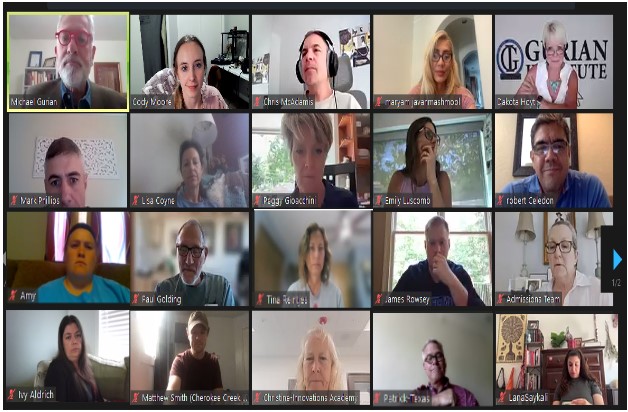
Our Virtual Summer Training Institute 2026 took place this last weekend. We are thankful to all our …




Michael,
Great essay. It pulls together work you and so many others have been doing over the years. The conference is a wonderful opportunity to bring experts together from around the world. This is the time to build on what you’ve done over these many years and to help create a world that works for everyone.