

Literacy development is a key theme for any school and family. It is also a key theme for our Virtual Summer Training Institute this June. To learn more about the event and to register, please visit https://gurianinstitute.com/
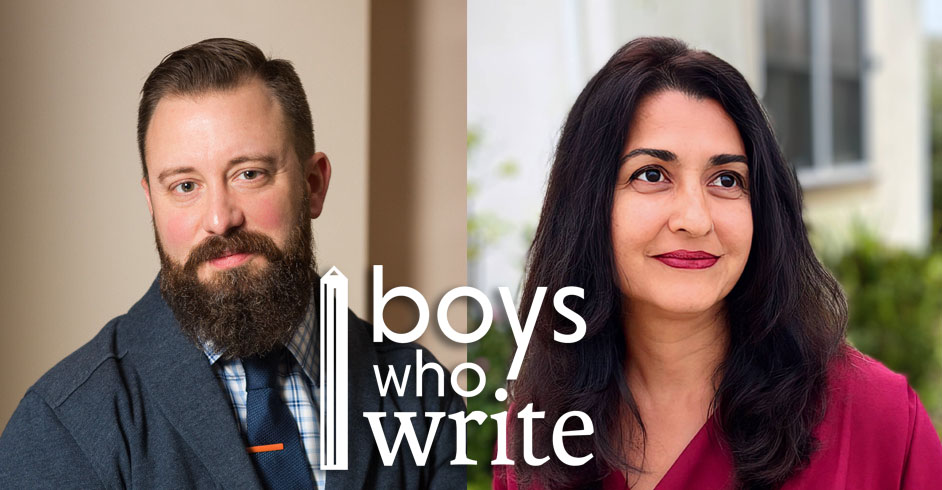
Today’s blog post looks head on at what works to increase literacy…and improve student education as part of the effort. The Founder of Boys Who Write is Shaila Kapoor and the Director of Curriculum is Jason Pittman who wrote this blog post about the issue and program.
Boys Who Write: Why We Built a Different Kind of Classroom
My journey into education did not begin with the intent to become a teacher. It began in internet design studios of the late ‘90s web-design-era. As an artist and designer, I believed in the raw potential of technology, and eagerly explored every architectural opportunity of the early internet. Yet, as the digital revolution boomed and offered me so much, I watched its benefits flow quickly past many communities around me. This disconnect created a fundamental pivot in my work. I moved from using technology to create art, to teaching young people how to wield it as a tool for their own narratives and futures.
As a teacher, I approached my work like an entrepreneur, always looking for ways to put creative ideas into practice and share them broadly. That mindset shaped my career, and again I found worlds of opportunity in a field with powerful potential. I spent several years as a “Teacher at Sea” with a National Geographic research vessel, co-designed school garden lunch programs that drew recognition from Michelle Obama, and helped launch Sal Khan’s lab school on Google’s campus.
It was during that time, in building consensus and stakeholders for designing the Khan Lab School that I met Shaila Kapoor and her husband Vishal. Their family and I were united by a drive to build learning experiences that felt as dynamic and relevant as the world outside the classroom, and we worked together with Sal, staff, and many stakeholders to design KLS.. Part of that work was creating the school’s first systems for parents, teachers and students to work together to create a customized curriculum. Working with the Kapoor children as we co-created the school’s inaugural systems for student-designed spaces, student-led conferences, and self managed ‘playlists’ left me with career-changing innovative ideas.
Years later, as I continued to seek work in innovative education, Shaila called me with the idea for Boys Who Write, and the purpose felt like a homecoming. Across my years in public and private schools from DC to California, I had seen too many bright, energetic boys slowly disengage. Their creativity was being stifled in classrooms that failed to engage their interests, or demonstrate that writing can be a joyful act. I watched boys’ innate artistry dim, severing their connection to their own voices and to others. At the same time, more appealing online voices with nefarious intentions have been making their despair feel seen and understood. The challenge of reversing this trend felt immense, but knowing Shaila’s track record for bringing big ideas to life, I was excited to jump into big challenges and big opportunities once again.
Literacy is a Joyful Creative Act
We did not set out to build a better literacy program. We set out to build something no one had ever seen before. This radical vision has been Shaila’s driving challenge to our core team from day one. Our goal is to reignite the fundamental human desire to tell a story and be heard, and to dismantle a classroom culture defined by force-fed literacy programs and high-stakes testing. At our core is one simple, radical challenge: Let’s make writing ART again. We seek to engage students with the challenging, satisfying joy of artistic creation in the medium of language and literacy, helping them embrace the experience of speaking, of being heard, and being celebrated in their learning.
The Boys Who Write model treats literacy as a creative, artistic skill that deserves an audience:
*We do not lecture on metaphor. Students produce it by composing original songs on Soundtrap, learning to write poetry by channeling complex emotions into lyric and beat.
*We do not teach narrative arc from a textbook. Boys discover it by writing and coding their own “Choose-Your-Own-Adventure” video games in Scratch.
*A debate podcast is not a speaking exercise. It is a team’s investigative journalism project on the use of AI in music. This is project-based learning with a relevant, public purpose.
And the vision is profound:
*Work has a real audience. Peers worldwide give feedback in support of their collaborative publication. Digital storefronts like Spotify and Amazon KDP publish student music and writing to worldwide audiences. Each of these projects mirrors a real-world creative industry.
*A boy who publishes a song learns the same tools as professional musicians and producers. A boy who codes a game practices with the same concepts used by software developers. A boy who researches and scripts a podcast builds skills essential for journalism, for law, and for business.
These are not classroom simulations. They are authentic, creative works that build career-ready competencies. This real accountability and ‘gravity’ of the audience transforms effort into pride and creates a powerful engagement. Boys enter with hoodies up, slouched in their seats, reluctant to engage before they first enter the room. But soon they become creators and collaborators, encouraging each other as they prepare their work for the world.
In our small group mentor sessions, we give boys space to ask: ‘What are you supposed to be?’ ‘What are you not allowed to show?’ Simply speaking these “rules” out loud, together, begins to loosen their hold. Boys gain something rarely offered in traditional classrooms: permission to understand and name their own emotions.
Our 20-minute lyric writing small group sessions encourage them to ask, “What am I actually feeling?” Coding a character’s choices invites a mentor-led reflection on their own decision-making. Recording a podcast requires articulating a viewpoint with clarity and conviction while respectfully acknowledging the viewpoints of peers.
Through these acts, boys discover that emotional awareness is not weakness. It is real power. It is the power to understand themselves and to connect with others.
The results from our 2025 programs were striking: in just the first thirty-six hours of instruction, we saw huge average improvement in both core literacy skills and key social-emotional competencies like self-management and communication.
Measured across pre and post tests aligned to state assessments, standards-aligned project rubrics, and DESSA assessments to measure SEL skills, the results were very exciting. This data validates our core belief: when you connect writing to creation, collaboration, and a real-world purpose, you unlock the availability and capability to learn.
These measurable gains in literacy and social-emotional learning signal something deeper. Boys are learning that their voices matter, especially in an increasingly online world. They are learning to name and understand their emotions. They are learning that they can navigate diverse audiences and cultures with confidence. This is preparation not just for the next grade, but for life. For careers that will demand adaptability. For relationships that will require empathy.
For a world that desperately needs young men who can both speak and listen. Boys Who Write is more than a literacy program. We are an exercise in rebuilding the relationship between boys and their own potential. They leave our programs not just better writers, but more self-aware young men. Ready for careers. Ready for relationships. Ready to shape the world with their stories. This is the art of education I have always sought to create, and a dream come true in its power to reconnect boys with the art of writing.
To learn more about Boys Who Write, visit www.boyswhowrite.org.
Contact: Jason@boyswhowrite.org.
Contact: Shaila@boyswhowrite.org.
To learn more about our Gurian Summer Training Institute and to register, please visit https://gurianinstitute.com/
Related News

Journalist Lisa Britton is a friend and colleague of Michael Gurian and the Gurian Institute. She is …

On September 18, I attended the Virginia Blueprint: Strategies for Boys and Men Conference at the Virginia General …
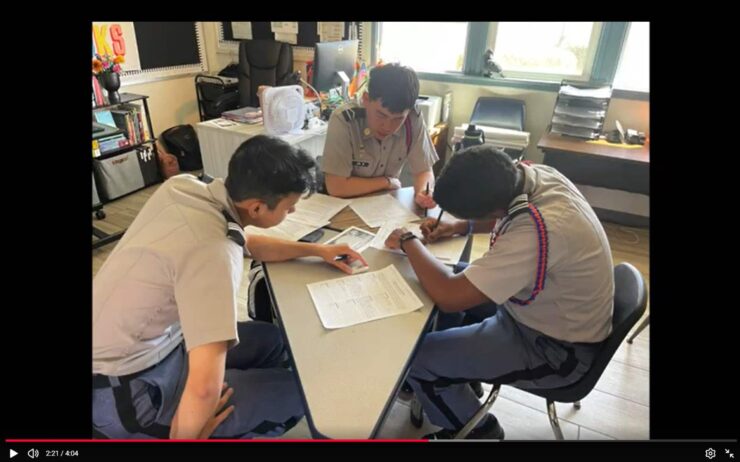
From Michael Gurian: I spent last weekend at Army and Navy Academy, a boys boarding school in Carlsbad, …